First the Basics: LDN 101

"LDN" (low dose naltrexone) is an "alternative" medication used with surprising success in treating immune disorders, both autoimmune and immune deficient. Taken orally at bedtime, LDN works by briefly blocking opiate receptors, thereby "tricking" the body into increasing endorphin production. Endorphins being a central part of the immune system, increasing their production has been shown to help correct immune defects.

Showing posts with label LDN. Show all posts

2/22/13

Update and Cannabis

Just an update, although there's really not a lot to report. In a nutshell, I'm about the same. Just older (62) and tireder. 
My pal Cindy sent this card for my last birthday; it still cracks me up!
I was diagnosed with MS in 2003, ten years ago this summer. I still don't have progressive MS, and am not much worse than I was 10 years ago. I developed chronic labyrinthitis during a period when I wasn't on LDN; I had been on it but ran out and couldn't get it refilled due to a fax problem at my doctor's office, and that was the first new symptom that came up since diagnosis.
What's next?
I wouldn't try to guess what to expect in the future, but I assumed MS would have me more screwed up by now. I mean, I never really thought forward about potential new disabilities, but if I had, I would have expected a good bit more drama than I've dealt with so far. I'm really not doing too badly at all. If my spine wasn't collapsed like a freaking train wreck, I'd be WAY closer to fine. As it is, I'm hanging in there, still enjoying my life but in a mild kinda way, and don't really think that much about MS.

I have the same general MS symptoms I've had for years; memory problems (including an almost total inability to multi-task), difficulty walking distances without support, chronic (but now very mild) labyrithitis, and nocturnal leg cramps, the latter of which might or might not be from MS. 

I take K+ and Magnesium for the leg cramps and sometimes a common ancient herbal remedy and I do fine, at least, as long as my lower legs don't get too cool; a heating pad or hot water bottle on cold nights does the trick. I have really bad insomnia anyway, so controlling the leg craps and spasms has been essential.

Treatment-wise, I'm still on LDN and nothing else just for MS, still getting it from The Compounder Pharmacy in Aurora Illinois. I take a few OTC  things which I'm  now getting from amazon.com for MS symptoms like urinary retention; I've been taking 2 capsules of D-mannose twice a day for  a few years now, at the suggestions of both my dear old Family Doc as well as a urologist I consulted once. D-mannose prevents urinary tract infections- it works perfectly for me.

I also take one 25mg promethazine tablet, a cheap generic prescription item, every morning for nausea, which comes with my chronic labyrinthitis.  And that helpful herb, when I'm lucky enough to find some.

By the way, I'm not recommending all this stuff, I'm just telling you what I'm currently taking. 
My dizziness and nausea are very minor compared to the acute stage, but I do get terribly motion sick in anything that moves. I can't even ride in a scooter in a grocery store because looking at stuff on shelves as I move long makes me sick, quick! But that goes back to childhood for me. 

To be clear, some of my mobility issues are due to a spinal injury that has nothing to do with MS; my back problems predate the MS by years; I already had a walker and a small collection of canes before my first MS symptom. And some of the symptoms overlap, like numbness in the legs and weakness; severe multilevel spinal stenosis had already caused that so I don't know if MS is adding to it or not involved at all. 
MS sucks, but other things, like spinal stenosis, suck pretty hard too.
 Almost 15 years after the initial injury and my spine isn't any better, so naturally I have some issues getting around. But the MS does cause me to walk kinda funny on top of the spinal stenosis neuropathies; my back injury prevents my from straightening up fully when standing, but MS makes me walk funny. Slightly. I don't know how else to explain it
Not Ministry-of-Silly-Walks funny, but my gait definitely isn't normal anymore.

However, I'm still walking, just not very far because of increasing back pain and numbness when I stand, and I don't walk unaided except around the house. 

MS makes it more likely I'll stumble, and my inner ear problems make it less likely I'll be able to recover my balance in time to prevent a fall, so I did fall twice this past year. I'm old enough that falling down is kind of a big deal. In fact, I'm still sore from falling last March, a solid year ago; I tripped over my own feet and landed on my side with my arm extended, so basically I landed on my armpit, and managed to hurt both shoulders. Oh well, live and learn. I pitched out the ill-fitting slippers I was wearing that contributed to my second fall and I just move more carefully. 

To that end, I use my walker a lot more. It's a 3-wheeled walker with a big pouch and a basket. I've had it since 1999. I can cruise around the larger expanses in my house pretty easily using the walker; I feel safer and move faster and more efficiently with it, even though I don't need it for short distances. It's just easier with it, as long as there's room for it to pass. It has lovely big tires that can take bumps and uneven surfaces really smoothly and safely.

So far I can still manage to walk through a grocery store or Home Depot if I use the cart like a walker; as I walk, I'm leaning heavily on my forearms on the cart handle. I have to move through the store pretty quickly, to reduce the amount of time I'm upright and therefore the amount of back pain. Unfortunately, I can't use a scooter in a store because looking at merchandise on the shelves while moving forward makes me very motion sick; but that's not just an MS thing;  I've been prone to motion sickness all my life.
Cannabis as illustrated in Köhler's Medicinal Plants book [1897], courtesy Wikipedia.
Cannabis also helps many of us with MS as well as people with chronic pain symptoms, by reducing pain, stiffness and cramps, and taking the edge off dizziness and nausea. 

It doesn't always help everyone, but in general, marijuana can help you sleep, it can help you relax, it can sometimes help you focus; marijuana can help so many things but again, it doesn't effect everyone the same way. It can make some people temporarily but miserably paranoid, it definitely messes with your short-term memory, and absolutely should NOT be used before driving because it can impair judgment.  
  Unfortunately, I don't live in a State with legal medical marijuana and can't possibly afford to relocate to a place that does. I am stuck here in dumbass red Texas, where there will probably NEVER be approval of medical marijuana! Heck, we're lucky to get to just walk around in public without a special permit here. 

Sorry to vent, but it's just so frustrating. I'm expected to either just suffer or be a criminal, a perfectly ridiculous position for a nice, peaceful 62-year-old disabled lady to be in. I don't want to be a criminal; I just want to be able to buy and take my freaking medicine without spending a fortune and without risking prison!
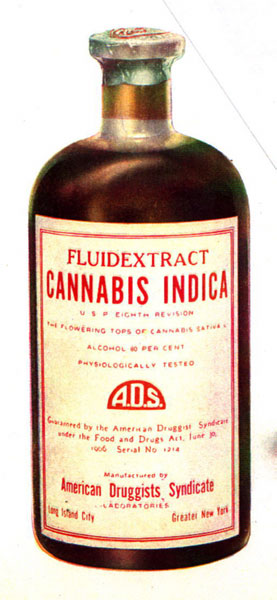
Doctors used to prescribe this all the time
The fact is, cannabis has been used legitimately as medicine for over 2,700 years; it only hasn't been considered medicine for about the last 75, thanks largely to competing financial interests, NOT health concerns. [Google "William Randolph Hearst and marijuana prohibition" and you'll get a perspective on why it was prohibited in the first place.]  

Fortunately, some states are moving back toward a more sane approach to marijuana use, but, not surprisingly, NOT Texas.  Heck, Texas is moving backwards so fast we'll soon be required to teach an alternative to the "theory" of a heliocentric Universe...
From my 9th great-grandfather, Sir Thomas Digges' book, "Sonne" in the middle, see?

So what specifically is pot supposed to do for MS, medically? Well, for me it has eased pain and spasticity and has helped greatly with depression, anxiety, and insomnia. The major downside is financial, because the prohibition makes it very hard to get and silly expensive. 

That's about it, enough redundant rambling. If you don't see new posts for awhile, assume I'm status quo :o)

7/8/07

FAQ's on LDN* (Low Dose Naltrexone)

What is Naltrexone?
Naltrexone is short for Naltrexone Hydrochloride (C20H23NO4-HCl), an opiate-antagonist prescribed for opiate drug addiction; it blocks the response to opiate drugs such as heroin or morphine. Doses for this usage are 50-150 mg.

So where did Low Dose Naltrexone (LDN) come from?
The idea of using Naltrexone at a much lower dosage for treating immune disorders such as MS is credited to Dr. Bernard Bihari, a practicing neurologist in New York, who began prescribing LDN for his MS patients in 1985.

How does Low Dose Naltrexone work?
LDN works by briefly* obstructing the effects of brain endorphins (the brain's natural painkillers). This has an effect of stimulating the increased production of these same endorphins, which re-balances the immune system, thus reducing the activity of the MS. This blocking effect lasts around 3 or 4 hours.

But how can this work? Isn’t MS is caused by an overactive immune system?
Although there is a long-held theory that MS might be caused by an overactive immune system, it has never been proven. Recent clinical studies indicate that this theory might not be true at all. The October 2004 issue of The Archives of Neurology reports a clinical study by researchers who found that intravenous immunoglobulin therapy applied after the first signs of MS significantly reduced the probability of developing clinically definitemultiple sclerosis. Patients receiving this immune-system boosting therapy also suffered fewer brain lesions.

What MS symptoms does LDN help?
Primarily neuromuscular spasm and fatigue, although patients have also reported improvements of numerous other symptoms. In addition, patients who are in the middle of an acute relapse when they start LDN have generally shown rapid resolution of the attack.

How fast does it work?
Around two-thirds of MS patients have some symptomatic improvement within the first few days.

What dosage and frequency should be prescribed?
The usual adult dosage of LDN for the treatment of MS is 4.5mg taken once daily at bedtime. Because of the rhythms of the body's hormone production, LDN is best taken between 9pm and 3am. The therapeutic dosage range for LDN is from 1.75mg to 4.5mg every night. Dosages below this range are likely to have no effect at all, and dosages above this range are likely to block endorphins for too long a period of time and interfere with its effectiveness.It is generally recommended that the patient begin on 4.5mg per day, and adjust the dosage if necessary. Prescribing 1.5mg capsules allows easy adjustment of dosage. (For example, the patient can take either 2 capsules for 3mg, or 3 capsules for a 4.5mg dose.)

How is LDN prepared?
LDN is prepared by a compounding pharmacy, who will make capsules by either grinding up 50mg tablets of Naltrexone, or using Naltrexone powder purchased from a primary manufacturer. The most popular source of Naltrexone is the 50mg "ReVia" Naltrexone tablet (DuPont), usually prescribed for treatment of drug and alcohol addictions. Naltrexone may also be taken as a solution (in distilled water) with 1mg per ml dispensed with a 5ml medicine dropper. If LDN is used in a liquid form, it is important to keep it refrigerated.
IMPORTANT: Make sure to specify that you do NOT want LDN in a slow-release form.

Are there any side effects?
All sources indicate that LDN has virtually no side effects. Occasionally, during the first week of use, patients may complain of difficulty sleeping. (Reports indicate that sleep disturbance is rare, occurring in less than 2% of users.) If this persists after the first week, dosage can be reduced from 4.5mg to 3mg. Full-dose Naltrexone (50mg 3x day) carries a cautionary warning for patients with liver disease. (This warning was placed because adverse liver effects were noted in early experiments involving 300mg daily.) The 50mg dose does not apparently produce impairment of liver function nor, of course, does the much smaller 3mg - 4.5mg dose. LDN, in the low doses used for MS therapy, is virtually non-toxic, simple to administer, and, compared with other MS drug therapy, very inexpensive.

What about cautionary warnings?
Because LDN blocks opioid receptors throughout the body for three or four hours, people using narcotic medication such as Ultram, morphine, Percocet, Tramadol, Duragesic patch or codeine should not take LDN until such medicine is completely out of the system. Steroids would counteract the effects of LDN, and so should not be combined. LDN should probably not be taken during pregnancy. LDN cannot be used by people already receiving beta interferon; because LDN stimulates the immune system and beta interferon suppresses it, the two therapies are incompatible.

What does it feel like to be on LDN?
At both high and low dosages, patients taking Naltrexone usually say they are largely unaware of being on medication. Naltrexone usually has no psychological effects and patients (at both high and low dosages) don't feel either "high" or "down" while they are on naltrexone. It is not addicting.

Why isn’t LDN routinely prescribed for MS?
Many physicians simply have not yet learned about the positive effects of LDN on MS symptoms. Others may be hesitant to prescribe LDN because it hasn’t yet been approved as an MS treatment by the FDA.

Why hasn’t LDN been approved by the FDA?
Although Naltrexone (in the higher 50mg dosage) was approved by the FDA in 1984, Low Dose Naltrexone (in the 3mg or 4.5mg dosage) has not yet been submitted for FDA approval. LDN cannot be officially approved by the FDA as an MS therapy until it undergoes specific clinical trials required by the FDA.

Why hasn’t LDN gone through a clinical trial as an MS therapy?
Clinical trials are usually initiated and funded by pharmaceutical companies, and these companies are not interested in promoting or marketing LDN.

Why aren’t pharmaceutical companies interested in exploring the possibility of LDN as an MS therapy?
Naltrexone was developed so long ago, no one holds a patent, so generic versions of the drug can be created and sold very inexpensively. LDN can't make anyone any money, so pharmaceutical companies are not willing to fund a clinical trial for a drug that will make them so little profit. Also, if LDN were certified by the FDA and became a preferred treatment for MS, the pharmaceutical companies who make the expensive ABCR (aka "crabs")drugs could lose million$ of dollar$. (In other words, it'$ all about the money.)

Are any clinical trials of LDN scheduled?
Responding to the rapidly-growing, patient-driven publicity about the success of LDN, the MS center at University of Texas recently announced plans for a full clinical trial of LDN as an MS therapy.

Are there any other plans to underwrite a clinical study of LDN and MS?
In August 2004, the LDN Research Trust was created in the UK. Conceived by a group of MS patients who have been helped by LDN, the Trust’s mission is to raise funds for the initiation of clinical trials for LDN. Their website,
http://www.ldnresearchtrust.org/, encourages contributions and participation. In conjunction with the Trust, Dr Alasdair Coles, a neurologist and MS specialist from Cambridge University, and Dr Robert Lawrence of Wales, himself an MS patient, are currently working on a proposal for a clinical trial of LDN for the treatment of MS.

Has LDN been reported in any of the major medical journals?
Medical journals are not usually interested in reviewing any drug therapy that has not yet had a major clinical trial. However, the peer-reviewed medical journal Medical Hypothesis recently accepted an LDN/MS hypothesis for publication; it will be published in the next few months.

Can a doctor legally prescribe LDN?
Of course. While it is illegal for a pharmaceutical company to market or promote a drug for a use other than that approved by the FDA, it is NOT illegal for a physician to prescribe an FDA-approved drug for a non-FDA-approved use. (Neurontin, for example, was approved by the FDA in 1993 for the treatment of epilepsy; yet it is routinely prescribed for the "off-label" treatment of MS symptoms.) All physicians understand that the responsible off-label use of an already FDA-approved medication such as Naltrexone is perfectly ethical and legal.

How many MS patients are taking LDN for Multiple Sclerosis?
No one is sure of the exact number, but it is known that thousands of MS patients worldwide are now using LDN, and this number is growing. Without the financial support of the pharmaceutical industry, the reputation of LDN has been driven solely by the patients themselves.

Are MS patients getting positive results from LDN?
A review of the anecdotal evidence indicates that most MS patients taking LDN have experienced considerable improvement, often within days or weeks of beginning the treatment.

How can I obtain LDN and what will it cost?
Answer: LDN can be prescribed by your doctor, and prepared by a compounding pharmacy. Naltrexone is a prescription drug, so your physician would have to give you a prescription after deciding that LDN appears appropriate for you.Naltrexone in the large 50mg size, originally manufactured by DuPont under the brand name “ReVia”, is now sold by Mallinckrodt as “Depade” and by Barr Laboratories under the generic name “naltrexone”. LDN is now being made available by hundreds of local pharmacies, as well as by some mail-order pharmacies, around the US. Some pharmacists have been grinding up the 50mg tablets of naltrexone to prepare the 4.5mg capsules of LDN; others use naltrexone, purchased as a powder, from a primary manufacturer.One of the first pharmacies to do so was Irmat Pharmacy in Manhattan. Their recent price for a one-month's supply of 4.5mg LDN (30 capsules) was $38. Irmat will ship it anywhere, in the US or to other countries, and will accept prescriptions from any licensed physician.

Pharmacies that are good sources of LDN:
Irmat Pharmacy, New York, NY (212) 685-0500
The Compounder Pharmacy, Aurora, IL (800) 679-4667
The Medicine Shoppe, Canandaigua, NY (800) 396-9970
Skip's Pharmacy, Boca Raton, FL (800) 553-7429
Smith's Pharmacy, Toronto, Canada (800) 361-6624

IMPORTANT: Make sure to specify that you do NOT want LDN in a slow-release form.Reports have been received from patients that some pharmacies have been supplying a slow-release form of naltrexone. Pharmacies should be instructed NOT to provide LDN in an "SR" or slow-release or timed-release form. Unless the low dose of naltrexone is in an unaltered form, which permits it to reach a prompt "spike" in the blood stream, its therapeutic effects may be inhibited.


Also, make sure to fill your Rx at a compounding pharmacy that has a reputation for consistent reliability in the quality of the LDN it delivers. The FDA has found a significant error rate in compounded prescriptions produced at randomly selected pharmacies. Dr. Bihari has reported seeing adverse effects from this problem.

11/7/06

Reality Bites

RRMS Prognosis~
(Warning: not-Candy-coated!)

It is a troubling fact that almost all newly diagnosed Relapsing Remitting Multiple Sclerosis (RRMS) patients and their families, upon requesting and expecting an honest assessment of what to realistically expect in the future, are deliberately fed "candy-coated" or downright misleading statistics. Whether the BS comes from a physician or from the NMSS (National Multiple Sclerosis Society), as a true believer in accurate thinking and complete information, getting manipulated when I've asked for the truth really bothers me!

This widespread withholding of the more discouraging statistics re: the likely long-term prognosis for the average MS patient is no doubt done with good intentions; it's simply an attempt to avoid "unduly upsetting" the newly-diagnosed and their loved ones. In fact, my own doctor told me that not too long ago, many doctors never even told their MS patients that they had (or might have) MS, because conventional medicine had nothing to offer anyway, so they rationalized lying to the patient by saying that "the stress of learning about the diagnosis could bring on an exacerbation of the illness".

Yeah? Well baloney I say; overwrought baloney.
Knowledge is power! And keeping patients in the dark is at best misguided, and in fact outright insulting, patronizing, eventually pointless, and is a perfect example of an outdated, paternalistic approach to the doctor-patient relationship.

Keeping the patient in the dark will eventually destroy trust as surely as it utterly defies the concept of patient education and "informed consent", not to mention plain truth. Those of us actually living with the disease have to experience whatever exists and lies ahead for us regardless of what we're been told, and I for one find that being lied to is generally much less helpful than actually being fully prepared with accurate information.

Those incomplete or misleading statistics to which I refer typically stop deliberately at 15 years after onset of symptoms; they really don't like to mention what happens after 20 years, because by then statistics are noticeably bleaker.

So if you're sure you're ready...

MS Statistics at 20 years out, Unsweetened

1. 90% of RRMS patients will develop Secondary Progressive MS (SPMS)

2. 80% of MS patients will have at least some degree of bladder dysfunction

3. 80% will have cognitive problems (the ability to multi-task in particular tends to ebb)

4. 70% will have at least some degree of sexual dysfunction

5. 50% will not be able to walk unaided

6. 66% will have at least some degree of pain from MS

7. 40% will never be pain free

8. 33-50% will have at least some degree of dysphagia (difficulty swallowing)

9. 10% will be institutionalized due to severe cognitive dysfunction resembling dementia

10. Up to 15% of MS patients die by suicide*.
*In 1991, the death by suicide rate was found to be 7½ times greater for MS patients than for non-MS patients; recent, larger studies however, indicate the suicide completion rate among MS patients is much higher, closer to 15% overall.